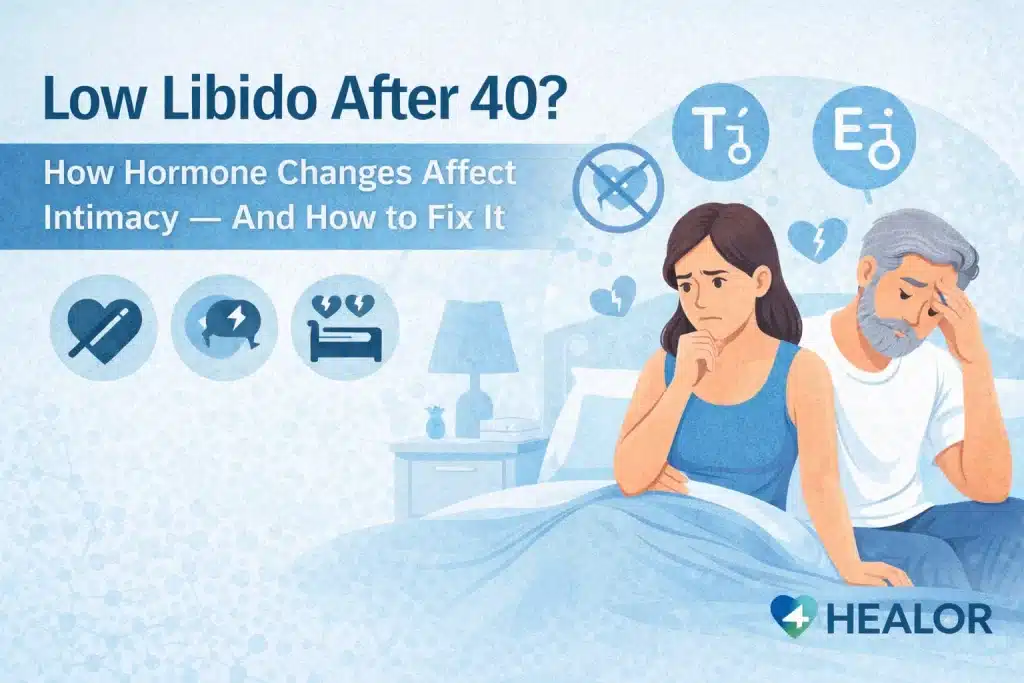
As women enter their 40s and beyond, their bodies undergo natural shifts that affect energy, mood, and intimacy. If you’ve noticed changes in desire or discomfort during intercourse, you’re not alone—this is a common part of midlife transition. Understanding Low Libido After 40 is an important step toward maintaining a fulfilling and confident sexual life.
At Healor in Las Vegas, we believe your body deserves exceptional care and support after 40. Sexual wellness is absolutely achievable in this decade and beyond. With the right foundation, women can enjoy intimacy, balance, and vitality for many years to come.
Defining Sexual Wellness After 40
Sexual health after 40 is about much more than physical function—it’s a holistic balance of mind and body that includes:
- Balanced hormones – the foundation for comfort, arousal, and desire
- Healthy circulation – supporting sensitivity and response
- Emotional connection – with both your partner and yourself
- Body confidence – feeling strong, vibrant, and at ease in your body
As hormone levels shift, your body may respond differently—but this doesn’t mean your intimate life has to decline. With expert care, women can remain confident, connected, and fulfilled.
Related reading:
👉 Female Sexual Dysfunction
Hormonal Health After 40: What’s Really Happening
The transition leading up to menopause—known as perimenopause—often begins in the 40s. During this phase, estrogen, progesterone, and testosterone fluctuate unevenly.
Common Effects of Hormonal Changes
Physical Changes
- Vaginal dryness
- Hot flashes or night sweats
- Irregular periods
Emotional & Desire Changes
- Reduced libido
- Mood changes or anxiety
- Desire becoming more emotional or situational
These changes are normal—but suffering through them is not required.
At Healor, our hormone specialists use advanced lab testing and personalized care to identify the root cause of symptoms rather than simply masking them.
Learn more here:
👉 Hormone Imbalance: What Should You Know?
Beyond Hormones: Emotional and Relational Support
Intimacy is not driven by hormones alone—it is deeply tied to emotional health, stress levels, and relationship dynamics. After 40, many women seek a deeper, more meaningful connection rather than spontaneous desire alone.
Stress, body image concerns, and life transitions can significantly impact intimacy. That’s why holistic support matters.
At Healor, we encourage open communication with partners and offer guidance on strengthening emotional connection. Mindfulness, counseling, and intentional self-care can all enhance intimacy and satisfaction.
Related education:
👉 How Can Hormone Imbalance Affect Your Sex Life?
The Foundation: Lifestyle Habits That Support Thriving
Daily habits play a powerful role in hormonal balance and sexual health:
- Nourish your body: Balanced meals with healthy fats and whole foods support hormone regulation
- Move regularly: Exercise boosts circulation, mood, and body confidence
- Prioritize sleep: Quality sleep is essential for hormone production
- Manage stress: Reducing cortisol helps protect libido and emotional balance
- Limit toxins: Minimizing smoking and alcohol supports blood flow and hormone health
Small, consistent lifestyle choices can have a profound impact.
Helpful read:
👉 Stress, Sleep, and Cortisol: A Holistic Approach to Better Rest
Medical Options: Reclaiming Comfort and Desire
When symptoms begin affecting quality of life, Hormone Replacement Therapy (HRT) may help restore balance, comfort, and desire.
Healor specializes in Bioidentical Hormone Replacement Therapy (BHRT)—hormones that are structurally identical to those naturally produced by the body.
BHRT may help:
- Improve libido
- Reduce vaginal dryness and discomfort
- Enhance mood and energy
- Improve sleep quality
Learn more:
👉 Bioidentical Hormone Therapy
👉 How to Know If You Need BHRT
We also offer non-hormonal options such as nutritional counseling, targeted supplements, and integrative therapies to support complete sexual wellness.
When to Seek Specialist Care — Don’t Wait
Persistent symptoms such as pain during intimacy, low libido, sleep disturbances, or mood changes are signs your body is asking for support.
The Healor team takes time to listen, evaluate, and create a personalized plan for your hormonal and overall health.
Explore care options here:
👉 Female Sexual Health Services
👉 Female Sexual Health – Centennial Hills
Conclusion
Thriving after 40 isn’t just possible—it should be your new normal. With balanced hormones, healthy lifestyle habits, and expert care, women can enjoy intimacy, confidence, and joy at every stage of life.
📅 Schedule a consultation today and take the first step toward feeling like yourself again—strong, confident, and deeply connected. 📞 Contact Us: https://healor.com/contact/
-
Is low libido after 40 normal for women?
Yes. Hormonal changes during perimenopause and menopause—especially shifts in estrogen, progesterone, and testosterone—commonly affect desire, comfort, and intimacy after 40.
-
What hormone changes cause low libido after 40?
Declining estrogen and testosterone levels can reduce blood flow, lubrication, and sexual desire, while progesterone fluctuations may impact mood and emotional connection.
-
Can hormone therapy help improve libido after 40?
Yes. Personalized hormone therapy, including bioidentical hormone replacement therapy (BHRT), can help restore balance, improve comfort, boost energy, and enhance sexual desire when medically appropriate.
-
Are there non-hormonal ways to improve intimacy after 40?
Absolutely. Lifestyle changes such as stress management, improved sleep, regular exercise, pelvic floor therapy, nutrition support, and emotional connection strategies can significantly enhance sexual wellness.
-
When should I see a specialist for low libido after 40?
If low desire, vaginal dryness, discomfort, mood changes, or fatigue persist and affect your quality of life, it’s time to consult a hormone or sexual wellness specialist for evaluation and personalized care.