
Introduction
NAD and ALA: A New Way to Fight Chronic Kidney Disease – Case report demonstrates the possible benefits of NAD and ALA injections in managing chronic kidney disease.
Nicotinamide adenine dinucleotide (NAD) and alpha lipoic acid (ALA) have gained attention for their possible regenerative and protective effects on various organ systems, including the kidneys. NAD is essential for cellular energy metabolism and has been studied for its potential to improve mitochondrial function. Alpha lipoic acid is an antioxidant that may help reduce oxidative stress and inflammation. This case report describes the clinical course of a 68-year-old male with CKD (chronic kidney disease) who appeared to benefit from monthly NAD and ALA injections, demonstrated by an improvement in serum creatinine levels.
👉 Alpha Lipoic Acid: A Natural Solution to Reduce Inflammation
Alpha Lipoic Acid: A Natural Solution to Reduce Inflammation : A Case report
Case Presentation
Patient Profile:
- Age/Sex: 68-year-old male
- Relevant Past Medical History:
- Chronic kidney disease (CKD)
- Type 2 diabetes mellitus
- Hypertension
- Coronary artery disease (four stents placed in 2022)
Clinical Timeline and Findings:
- January 2024 – Acute Kidney Injury (AKI):
- Chief Concern: Significant diarrhea leading to dehydration.
- Serum Creatinine Peak: 2.9 mg/dL (up from baseline of ~1.0–1.1 mg/dL).
- Assessment: Likely pre-renal AKI secondary to volume depletion.
- Plan: Rehydration and close follow-up.
- February 1, 2024 – Initial Evaluation:
- Reason for Visit: patient was evaluated in the primary care doctor office for a New patient appointment for AKI, baseline creatinine approximately 1.04 mg/dL.
- Plan: Recheck labs to confirm improvement of AKI before further workup. Scheduled return in one month.
- March 13, 2024 – Follow-Up:
- Blood Pressure: 101/69 mmHg.
- Serum Creatinine: Improved from 2.9 to 1.9 mg/dL, but still above baseline.
- Management Changes: Reduced losartan to 50 mg daily, held metformin due to ongoing renal concerns. Planned repeat labs and follow-up in one month.
- September 23, 2024 – Six-Month Follow-Up:
- Blood Pressure: 111/73 mmHg, pulse 90 bpm.
- Serum Creatinine: Stabilized at 1.8–1.9 mg/dL.
- Additional Concerns: Metabolic acidosis (low serum bicarbonate); started sodium bicarbonate. Patient was advised to reduce apple cider vinegar use due to its potential contribution to acidosis.
- Regenerative Option Discussion: Patient expressed interest in adjunctive therapies; recommended NAD and ALA injections monthly for six months, given their potential to support mitochondrial function and reduce oxidative stress.
- March 19, 2025 – Recent Follow-Up:
- Blood Pressure: 118/72 mmHg, heart rate 76 bpm.
- Subjective Report: Patient feeling better and more focused, attributing improvement to NAD and ALA injections.
- Serum Creatinine: Improved further to 1.5 mg/dL.
- Plan: Continue monthly NAD and ALA injections, return in five months for reassessment.
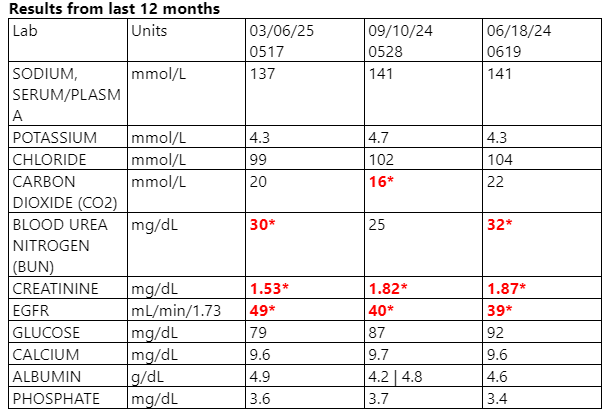
Laboratory trend:
Discussion
This case illustrates a possible therapeutic benefit of adding monthly NAD and ALA injections in a patient with a history of CKD and an episode of AKI. Although his acute injury was likely triggered by dehydration, the patient’s creatinine remained elevated for several months before he began receiving NAD and ALA. Subsequent lab results over time showed gradual improvement from 1.9 mg/dL down to 1.5 mg/dL.
The proposed mechanisms by which NAD and ALA might exert renal-protective effects include:
- Enhanced Mitochondrial Function: NAD is a key cofactor in redox reactions and plays a role in cellular energy metabolism, potentially aiding in renal tubular repair.
- Antioxidant and Anti-inflammatory Properties: ALA may help mitigate oxidative stress, which can contribute to progression of CKD.
The temporal association—improvement in serum creatinine noted after several months of adjunctive NAD and ALA therapy—suggests a supportive role. However, confounding factors (e.g., blood pressure control, metabolic acidosis management, dietary changes) must be considered. Further investigation and controlled studies are warranted to clarify these compounds’ role in CKD management. If you are interested in scheduling an evaluation, please feel free to reach out to us.
👉 Cannabis and Kidney Disease
https://healor.com/cannabis-and-kidney-disease/
Conclusion
In this single-patient experience, monthly injections of NAD and alpha lipoic acid appeared to correlate with a notable improvement in renal function, measured by a decrease in serum creatinine from 1.9 mg/dL to 1.5 mg/dL. While this observation is encouraging, robust clinical trials are needed to formally establish the efficacy and safety of NAD and ALA in chronic kidney disease. Nonetheless, this case highlights the potential of adjunctive metabolic and antioxidant therapies to support renal health, especially in patients with chronic kidney disease who seek additional interventions beyond standard medical care.
👉 Can NAD Injections Slow Down Aging?
Can NAD Injections Slow Down Aging?
Disclaimer:
This case report is for informational purposes only and should not be interpreted as a definitive endorsement or guideline for the treatment of chronic kidney disease with NAD and alpha lipoic acid. Clinicians should tailor interventions to individual patients’ needs and base decisions on clinical judgment, ongoing research, and current practice guidelines.
👉 Learn About Healor’s Integrative Medical Approach
https://healor.com/
👉 Explore Personalized Primary Care & Chronic Disease Management
https://healor.com/direct-primary-care/
👉 Meet Our Medical Team
https://healor.com/our-team/
👉 Schedule a Medical Consultation
https://healor.com/contact/
-
What is NAD and why is it important for kidney health?
NAD (nicotinamide adenine dinucleotide) plays a key role in cellular energy production and repair, which may support kidney cell function under metabolic stress.
-
What is alpha-lipoic acid (ALA)?
ALA is a powerful antioxidant that helps reduce oxidative stress and inflammation—two key contributors to chronic kidney disease progression.
-
Can NAD and ALA reverse kidney disease?
These therapies are supportive, not cures. They may help slow progression and improve cellular health when used alongside standard medical care.
-
Who may benefit from NAD and ALA therapy?
Patients with early to moderate chronic kidney disease, metabolic syndrome, or high oxidative stress may benefit after proper medical evaluation.
-
Should I talk to a doctor before starting NAD or ALA?
Yes. Kidney disease requires careful monitoring. Supplements and IV therapies should only be used under physician supervision to avoid interactions or complications.