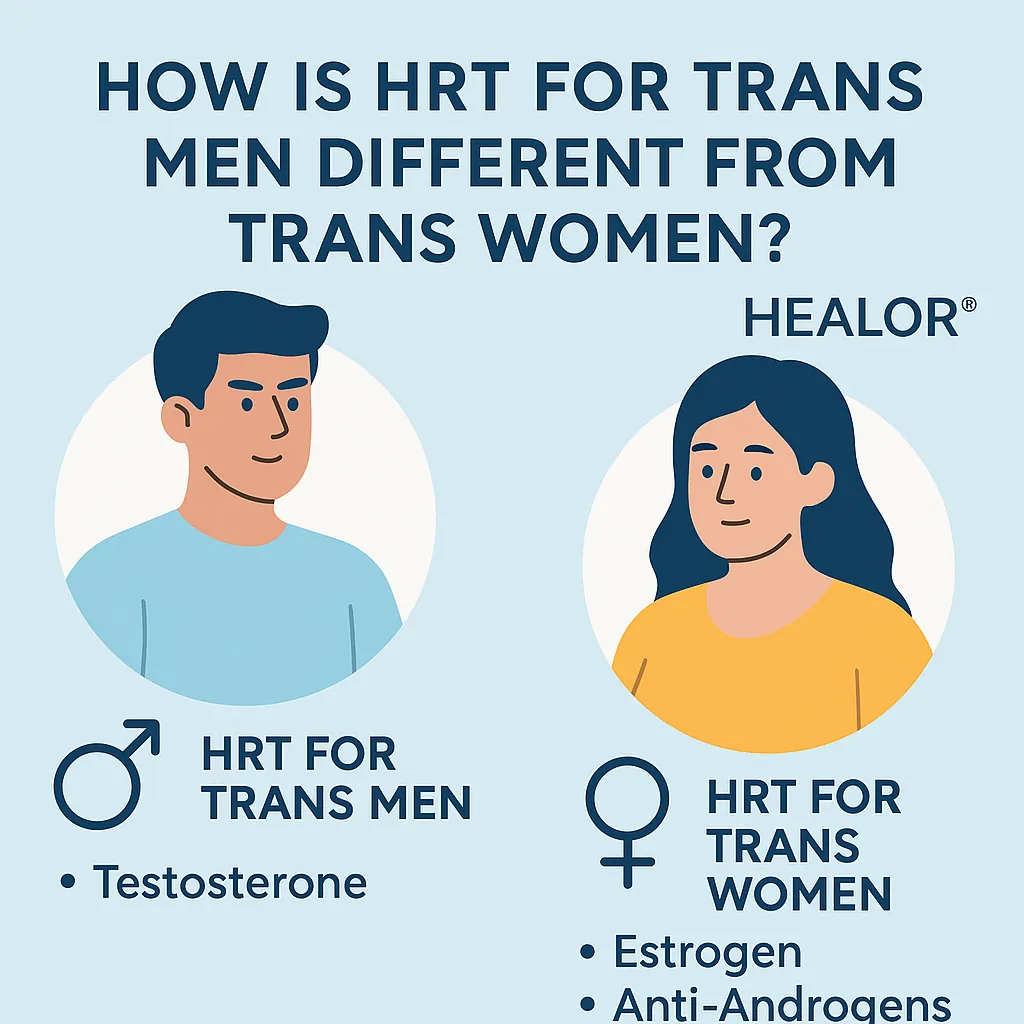
How Is HRT for Trans Men Different from Trans Women?
Choosing to undergo a female-to-male (FTM) or male-to-female (MTF) transition is a deeply personal and important decision. If you’re considering hormone therapy as part of your transition, double board-certified physician Dr. Raj Singh at HEALOR® works closely with the LGBTQ community to support safe, informed gender-affirming care.
Gender dysphoria occurs when a person’s gender identity does not align with their sex assigned at birth and may contribute to anxiety, depression, or emotional distress. Many individuals choose transgender hormone therapy as part of their transition. During a consultation in Las Vegas, NV, patients can learn whether they are candidates for hormone replacement therapy (HRT) and discuss options such as estrogen therapy or testosterone therapy.
👉 Diagnosis of Gender Dysphoria
https://healor.com/diagnosis-of-gender-dysphoria/
What Is HRT?
Transgender hormone replacement therapy involves administering hormones to help individuals develop physical characteristics that align with their gender identity. At HEALOR, we provide a safe, respectful, and supportive environment for patients undergoing this process.
Treatment varies based on individual goals and medical needs:
- Transgender men (FTM) typically receive testosterone
- Transgender women (MTF) typically receive estrogen and, in some cases, testosterone blockers
Hormones may be administered through oral medication, topical creams or gels, injections, or pellets. Dr. Singh determines the safest method and dosage based on lab testing and overall health. To understand how treatment is monitored, you may also find this helpful:
👉 How Does Transgender Hormone Transition Therapy Work?
Results occur gradually. Most patients begin noticing physical changes within six months, with continued changes over the first one to two years of therapy.
How is HRT For Trans Men Different from Trans Women?
Each patient’s response to hormone therapy is unique, but there are common physical changes associated with feminizing and masculinizing hormone therapy.
Common effects of feminizing hormone therapy (MTF):
- Softer skin
- Decreased erections
- Reduced libido
- Testicular atrophy
- Breast development
- Decreased muscle mass
- Redistribution of body fat
- Reduced facial and body hair growth
Learn more about feminizing therapy expectations here:
👉 Male to Female Hormone Therapy: What to Expect
Common effects of masculinizing hormone therapy (FTM):
- Oilier skin and acne
- Cessation of menstrual periods
- Increased facial and body hair
- Voice deepening
- Redistribution of body fat
- Vaginal atrophy
- Clitoral enlargement
- Increased muscle mass
- Possible hair loss
For additional safety considerations, you may also explore:
👉 Side Effects of Transgender Hormone Therapy
During your visit, Dr. Singh discusses expected changes, timelines, and potential side effects so you know what to expect throughout treatment.
Learn More About Transgender Hormone Therapy in Las Vegas
At HEALOR®, we are committed to providing compassionate, confidential, and evidence-based care for the LGBTQ community. Dr. Raj Singh has extensive experience guiding both trans men and trans women through hormone therapy safely and thoughtfully.
If you’re ready to explore gender-affirming hormone therapy or have questions about starting HRT, contact our Las Vegas office to schedule a consultation and learn more about your options.
FAQs about transgender hormone therapy
-
Do I need a letter from a psychiatrist to start treatment?
Yes, we do require a letter of statement from a psychiatrist or counselor before you start HRT.
-
When will I stop having my period?
Patients on testosterone can expect cessation of menstrual periods in about six months.
-
What are some risks for a female to male transition?
Patients can experience side effects such as male pattern baldness, an increase in red blood cell production, which increases your risk of stroke or heart disease, and elevated cholesterol and liver enzymes.
-
What are some risks for a male to female transition?
Patients can experience elevated lipid levels such as triglycerides, an increased risk of developing breast cancer, and an increased chance of developing blood clots.