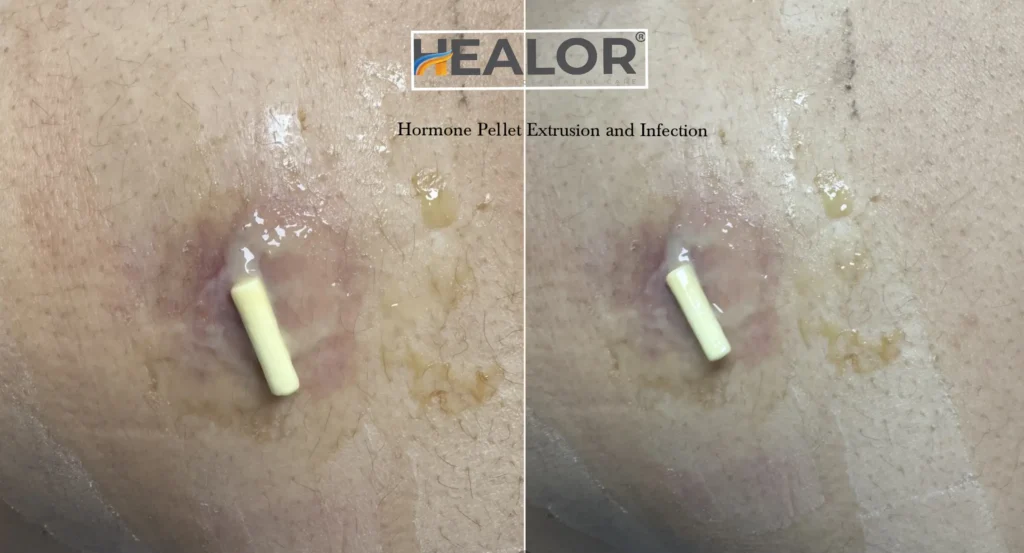
Did your Hormone Pellet Pop Out? Hormone pellet therapy has become increasingly popular as a convenient way to deliver hormones for a range of purposes—from managing menopausal symptoms in women to optimizing testosterone levels in men. These small, rice-sized pellets are inserted under the skin to offer a steady release of hormones over several months. However, like any medical procedure, hormone pellet therapy is not without potential complications. One such complication is pellet extrusion, which occurs when the pellet works its way out of the skin prematurely.In the picture above you can see hormone pellet extruding out in addition to surrounding infection.
If you’re considering hormone pellet therapy or have recently undergone the procedure, it’s essential to understand what pellet extrusion is, why it happens, how to recognize it, and what you can do about it.
👉 Bioidentical Hormone Therapy for Energy After 40
https://healor.com/bioidentical-hormone-therapy-for-energy-after-40/
What Is Hormone Pellet Extrusion?
When healthcare professionals perform hormone pellet therapy, they typically insert small pellets containing bioidentical hormones (often testosterone or estrogen) just beneath the skin—most commonly in the buttock or hip area. Pellet extrusion refers to the pellet migrating out of the tissue and exiting through the small incision site or through the skin nearby. Although it’s relatively uncommon, it can still happen in a small percentage of patients.
👉 Is Pellet Hormone Therapy Right for You?
https://healor.com/pellet-hormone-therapy/
Why Does It Happen?
There are a few primary factors that increase the likelihood of pellet extrusion:
- Incorrect Placement
If the pellet is inserted too close to the surface of the skin, it is more likely to migrate out. A skilled practitioner will insert the pellet into the subdermal fat layer at a depth that keeps the pellet secure. - Activity Level
Increased physical activity (especially strenuous activities or exercises that involve the hips and buttocks) can put extra stress on the incision site. High-impact movements or pressure directly over the insertion area might force the pellet closer to the surface over time. - Skin or Incision Complications
Any infection, significant swelling, or fluid build-up near the incision could interfere with proper healing and push the pellet out. This is what happened in the case above. In this case, the patient did not follow proper instructions and went swimming two days later after the procedure resulting in infection. - Individual Healing Differences
Everyone’s body responds and heals differently. Poor wound healing or a compromised immune system could increase the risk of pellet extrusion.
👉 Testosterone Pellet Therapy for Men: Everything You Need to Know
https://healor.com/testosterone-pellet-therapy-for-men/
Signs and Symptoms
If your pellet starts to extrude, you may notice:
- Redness or Irritation: You might see redness or inflammation around the insertion site.
- A Small White or Beige Dot on the Surface: In some cases, you can see or feel the pellet nearing the skin’s surface.
- Pain or Discomfort: While mild soreness after insertion is normal, ongoing or worsening pain can indicate a problem.
- Drainage or Discharge: If the incision site opens or weeps fluid, it may signal that the pellet is being pushed out, especially if there is any sign of infection.
If you suspect extrusion, contact your healthcare provider promptly to get a professional evaluation.
👉 Severe Complication of Hormone Pellet Insertion
https://healor.com/severe-complication-of-hormone-pellet-insertion/
Prevention Tips
- Choose an Experienced Provider
Proper placement is the first and most critical step in preventing extrusion. Work with a practitioner who has specialized training and experience in pellet therapy. At HEALOR, we perform hundreds of hormone pellet procedures every year. - Follow Post-Insertion Instructions
After the procedure, most providers recommend avoiding strenuous exercise or heavy lifting for a short period (usually a few days to a week). Following these guidelines helps the incision begin to heal and keeps the pellet securely in place. - Keep the Area Clean and Dry
Proper hygiene reduces the risk of infection, which can complicate healing and increase the likelihood of extrusion. - Monitor Your Incision
Check the area regularly for excessive redness, swelling, or discharge. Catching potential issues early is key to preventing pellet extrusion. - Avoid Direct Pressure on the Site
Try not to sit on hard surfaces for prolonged periods right after insertion and avoid direct trauma or consistent friction (e.g., tight clothing).
👉 Bioidentical Hormone Therapy (Service Page)
https://healor.com/service/bioidentical-hormone-therapy/
What to Do If Your Hormone Pellet Pop Out
- Contact Your Healthcare Provider:
It’s crucial to seek professional advice as soon as possible. Your provider may remove the pellet completely if it is partially out or nearly out, to prevent infection or further irritation. - Assess Hormone Levels:
If the pellet has completely come out, you may need a replacement to maintain hormone balance. Your healthcare provider can help determine whether you need a new pellet insertion or if another treatment approach is more appropriate. - Watch for Signs of Infection:
Keep an eye out for excessive redness, swelling, fever, or persistent pain. If you suspect infection, medical attention is necessary.
Will Extrusion Affect My Hormone Therapy?
If a pellet extrudes shortly after insertion, you might experience a disruption in hormone balance or less benefit than anticipated. Usually, your provider will discuss whether you need an immediate replacement or if you can wait until your next scheduled insertion. If you’re already near the end of your pellet’s usual lifespan (often three to six months, depending on the specific hormone and dosage), the impact may be minimal, and your provider may recommend waiting until the next scheduled treatment.
Final Thoughts
Hormone pellet therapy can be life-changing for many individuals, offering stable hormone levels and relief from symptoms that impact quality of life. While pellet extrusion is an unwanted—but occasionally possible—complication, understanding why it happens and how to minimize the risk is key to ensuring a successful experience.
If you’re concerned about pellet extrusion or suspect it has happened, reach out to your healthcare provider. With proper technique, post-procedure care, and monitoring, most patients enjoy the benefits of hormone pellet therapy without encountering extrusion. By working closely with a qualified practitioner and following the recommended guidelines, you can help keep your therapy on track and maximize your results.
👉 Meet Our Medical Team
https://healor.com/our-team/
👉 Schedule a Consultation
https://healor.com/contact/
Why did my hormone pellet come out after insertion?
Pellet extrusion can occur if the insertion site doesn’t heal properly. Common causes include infection, excessive movement, pressure on the area, poor insertion depth, or early disruption of the incision.
How common is hormone pellet extrusion?
Pellet extrusion is uncommon but recognized. Rates vary depending on provider experience, insertion technique, post-procedure care, and individual healing factors.
What are the signs that a pellet may be coming out?
Warning signs include increasing pain, redness, swelling, drainage, bleeding, or the pellet becoming visible or palpable near the skin surface.
Can infection cause a hormone pellet to pop out?
Yes. Infection is one of the most common reasons for pellet extrusion. Inflammation can prevent proper tissue sealing, allowing the pellet to migrate outward.
What should I do if my hormone pellet pops out?
Contact your medical provider immediately. Do not attempt to reinsert the pellet yourself. The area should be evaluated for infection or complications.